The underlay plays an important role in the installation of floor coverings, especially with floating or glued parquet. We explain everything: from the benefits to the choice of the type of underlay and its installation.
What is the purpose of an underlay?
Are you planning to install a parquet floor? Then choosing the right underlay is an important step. The underlay forms a supporting structure between the existing floor and the parquet planks. It provides a stable and even surface. There are different types of underlay on the market, each with its own characteristics.
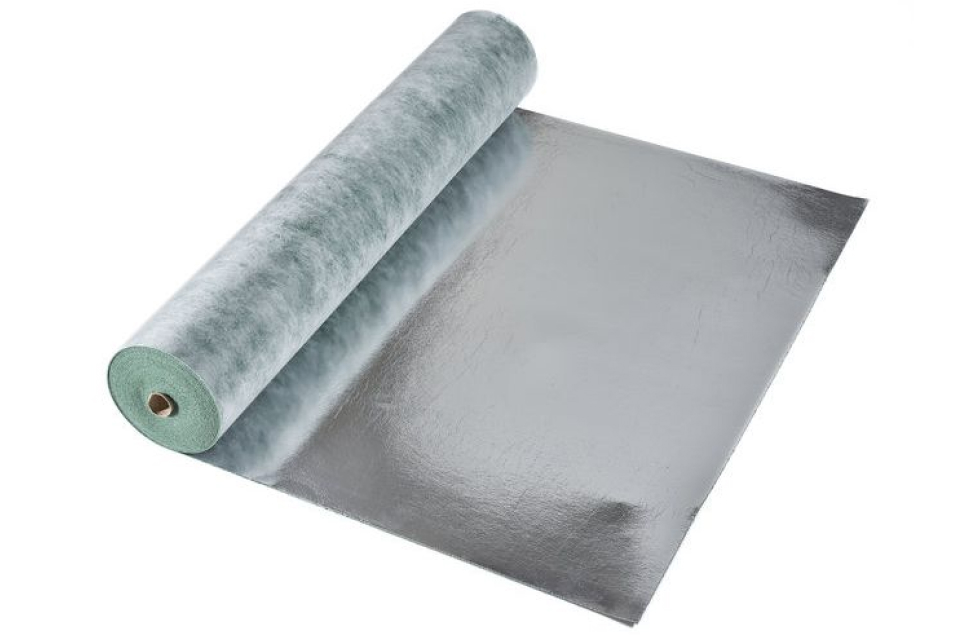
Excellence Plus underlay
Certain types of underlay are fitted with a moisture barrier that protects the parquet from possible damage. Compare the different options and choose the underlay that is best suited to your type of parquet floor and to the characteristics of your room. Moisture or vapor barriers are also available separately, as they are necessary when installing parquet.
Not only when laying parquet, but also when laying other floors, you should pay attention to the underlay. Read in this article why laying an underlay is important.
Why insulate under a parquet floor?
The underlay plays an important role in the lifespan of the parquet floor because it distributes the pressure exerted on the floor evenly. It also protects against fluctuations in humidity, reducing the risk of deformation and damage. In addition, an underlay absorbs shocks, resulting in better walking comfort.
Installing an underlay under parquet offers significant benefits, both in terms of comfort and for the energy efficiency of your space. An underlay:
- Improves thermal insulation and thus contributes to maintaining a constant temperature in the room by reducing heat loss. This way you can nicely save on energy!
- Improves the sound insulation of the home by absorbing shocks, reducing the spread of noise and creating a quieter and more pleasant atmosphere. This is especially beneficial in rooms where silence is important, such as bedrooms and offices.
Is an underlay under my parquet really necessary?
Whether or not you should place an underlay under your parquet depends primarily on the chosen type of parquet and on the manufacturer’s recommendations. In many cases, however, an underlay is strongly recommended, or even necessary.
Is an underlay necessary with floating parquet?
An underlay is essential. As explained above, the underlay ensures a proper installation of the floating floor, improving sound insulation, as well as acoustic and thermal insulation. It is best to follow the recommendations of your parquet manufacturer, as some types of parquet may require an underlay with specific characteristics.
Which underlay should you choose for a floating floor?
There are different types of underlay suitable for a floating floor. A polyethylene foam underlay is the most common and the cheapest. You buy it in rolls, it is easy to install and offers good thermal and acoustic insulation. Note: without an integrated vapor barrier, PE foam is not recommended for a floor exposed to moisture. For fiberboard or cork underlays (with a thickness between 2 and 8 mm), an additional vapor-proof film must also be applied if the floor is exposed to moisture.
These two ecological alternatives can nevertheless deliver good performance in terms of sound and acoustic insulation. Another option is an extruded polystyrene underlay. This is sold in sheets or rolls, is fairly thick (5 mm) and adapts to all configurations. Moreover, this material offers excellent sound and thermal insulation and is very moisture-resistant. On the other hand, it is also highly flammable and perhaps too compressible for installation under an engineered parquet.
Is an underlay recommended with glued parquet?
An underlay is not really necessary under glued parquet, but it can improve the acoustic comfort of the home.
Which underlay is suitable for glued parquet?
In the case of a glued parquet floor, an underlay is not really necessary. But we still recommend installing one, for better acoustic and thermal comfort. Not all underlays are compatible with this type of installation. A cork underlay is the most suitable. The underlay is then glued to the subfloor, after which the parquet is glued onto the underlay (double gluing). Another option is a foam underlay specially designed for glued installation of parquet with tongue and groove. The foam has a perforated structure on which the glue adheres better. A glued parquet can also withstand moisture better. The glue used to bond the parquet protects against moisture.
How thick should an underlay be for your parquet?
First of all: keep in mind that a flat subfloor without unevenness is an absolute requirement for a parquet or laminate floor. If the irregularities are too large, the floor must first be leveled. For insulation, an underlay a few millimeters thick is sufficient. Although the underlay affects the insulation quality, an underlay that is too thick, and also too compressible, can damage the parquet placed on top of it. Therefore, always follow the recommendations of professionals.
In which cases should an underlay have a moisture barrier?
A moisture barrier is a Polyane film that prevents moisture from rising from the subfloor, thus protecting the floor covering. Without a moisture barrier, the parquet can swell and fungi and mold can appear at the bottom of the walls. This protection is absolutely necessary when installing floating parquet. But here is the good news: many underlays come standard with a moisture barrier.
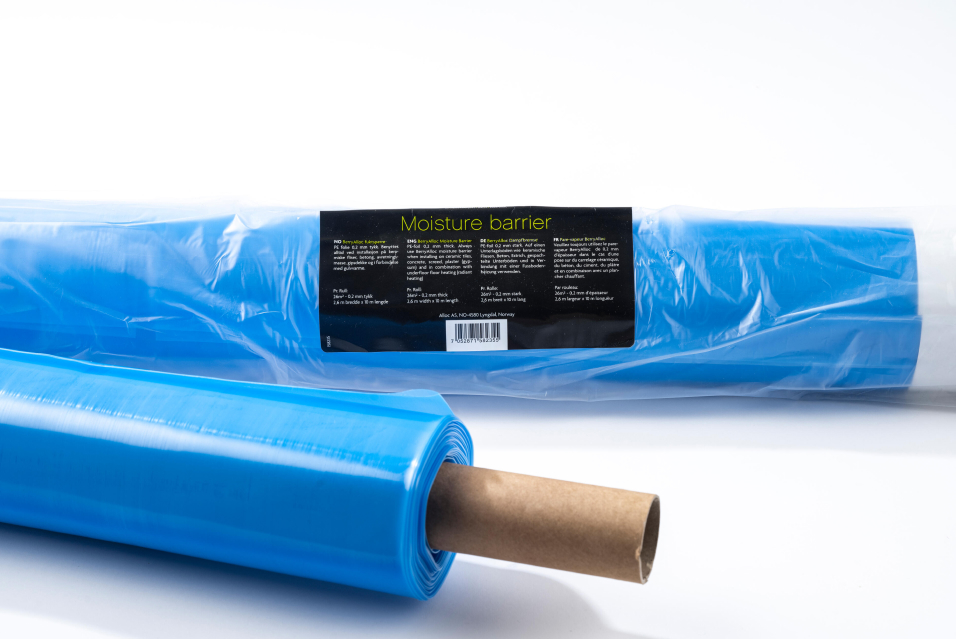
How do you install an underlay for parquet?
The installation of the underlay differs depending on its form, in sheets, mats or rolls. Underlays in rolls or mats only need to be unrolled or laid open in the installation direction of the parquet planks. Sheets must be laid side by side, with the edges against each other, diagonally to the parquet planks. The different pieces of roll, mat and sheet must be fixed together with adhesive tape. In some cases, underlay sheets come with a system to connect them together.


.jpg?width=3429&height=4000&name=neroli_pqt_v4_1900x190_berryalloc_rsh_012%20(1).jpg)


.jpg?width=300&name=Overview%20image%20blog%20home_Myfloorstyle_gyant%20xl%20warm%20natural(398x344).jpg)

.jpg?width=300&name=Overview%20image%20blog%20home_Myfloorstyle_basetec%20underlay(398x344).jpg)